

A feminist's love letter to the Manic Pixie Dream Girl
The MPDG showed me that being weird is cool and I still love her for that.
It’s 2004, and I just met two women, probably considered insufferable by today’s standards, that I just can’t get out of my head: Clementine (Kate Winslet) from Eternal Sunshine of the Spotless Mind and Sam (Natalie Portman) from Garden State.
Now, before I dive into this love letter to the Manic Pixie Dream Girl, I think that you may need some context on who you’re dealing with. In this time travel post, remember it’s 2004, I am 22 years old and have only existed outside the shackles of my ultra conservative, aggressively religious, prison-level lockdown strict, ‘because I said so’ childhood home for about three years. Everything is new, everything is magical.
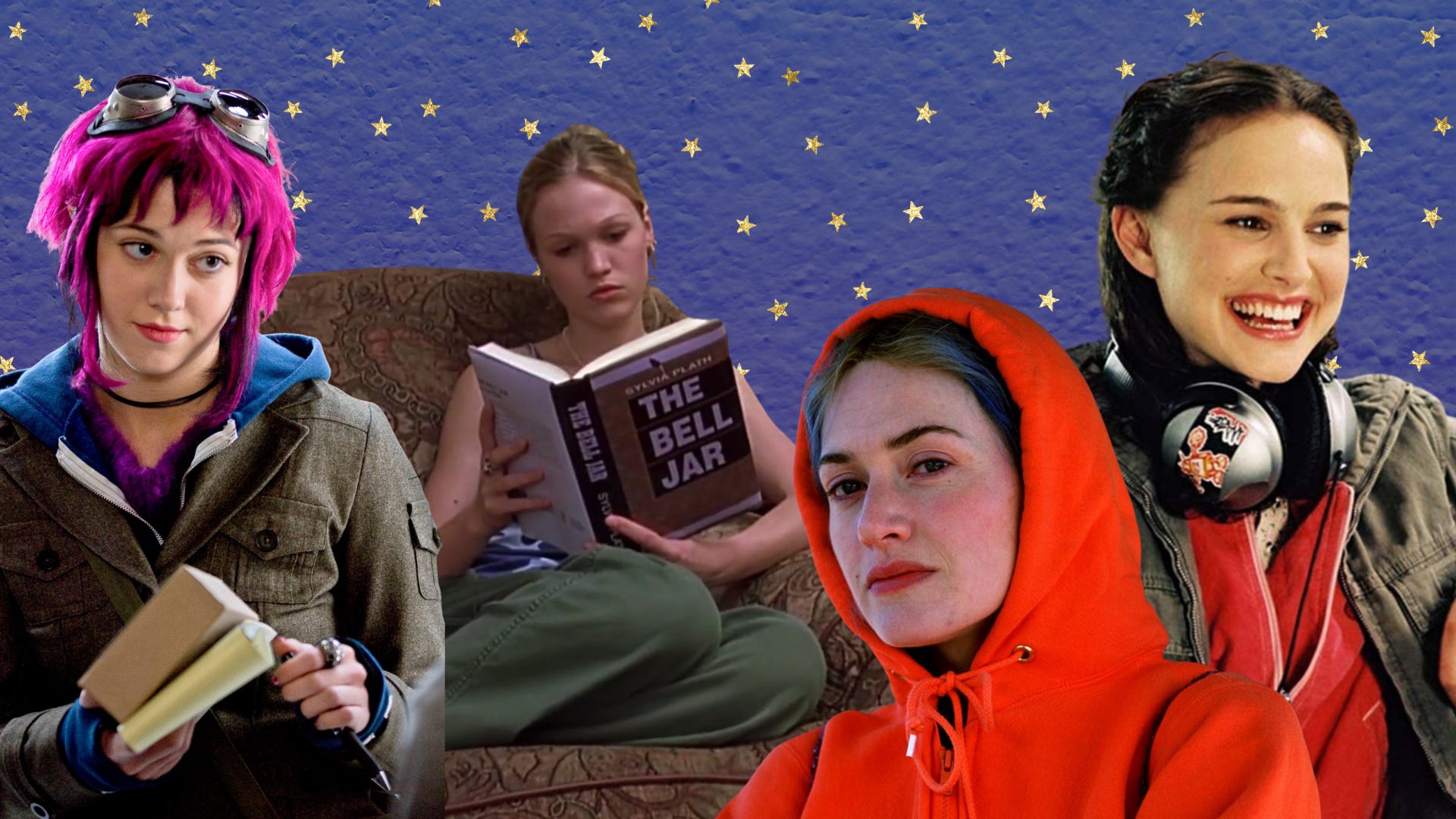
Clem and Sam showed me the path to weirdness, then came Kat (Julia Stiles) from 10 Things I Hate About You. Kat showed me that you can also take no shit, which was a concept that escaped me. Saying ‘no’ or ‘talking back’ when something didn’t sit right was never an option in my home, so consider the elation that washed over me when I rented 10 Things, probably from Blockbuster if they were still around, and saw a gal who was in complete control of her destiny. She knew what she wanted, and she didn’t waver.
Then came Ramona. Now I have to admit, it’s been since 2010 that I saw Scott Pilgrim vs the World, so my Ramona memories are not as crisp as those from my formative tangle with freedom. Upon a quick search, it’s confirmed that she is an MPDG (Manic Pixie Dream Girl), but that there is a sprinkle of more to her. While I don’t remember the movie very well, I do recall Ramona and thinking, ‘ Yeah, I dig her vibe and her style. ‘ I think that — as shallow as it is — her style was exactly what I connected with, or maybe wanted to connect with, since I personally didn’t really dress like Ramona, but I wanted to.
The point I’m making with this post is that, while these characters were indeed created to help propel the storyline of a male character, for a little 20-something girl from a dysfunctional home and childhood, I really connected with the concept of possibility through them.
These characters were bold, unique and different. They were ‘quirky’ and had cool hair and/or cool clothes, and mainly carried a vibe that was ungovernable, which was something my little pre-fully-developed frontal lobe was starving for. They showed me that the type of gal I wanted to be was out there, sort of… I didn’t know what being a feminist officially meant, yet, so give me a break on that piece of it all. Still, I knew I identified with these characters on an aesthetic and, to some extent, a behavioral level.
The constant book reading or sketchbooking, the funky attire and hair, the brooding and sometimes moody disposition. I found myself in an awkward place, trying to figure out who I was in a time when I was newly on my own and had never been allowed to be anything other than what my family deemed acceptable. For me, the MPDG was truly a dream, until it wasn’t; then it became a possibility.
So, for that alone, let’s give the MPDG a little bit of a break, granted that I don’t love the fact that the sole purpose is for a male character. Still, if you can remove that from the MPDG archetype and just look at the few dimensions of her that we do get, she is actually a pretty cool gal who would be a great friend and a blast to thrift with. She would tell you that you have food in your teeth, she’d let you borrow her favorite boots, and she’d introduce you to some great books and records.
So, let’s let her be that version, and that version alone.
Thanks for time-traveling with me in this one.
— R